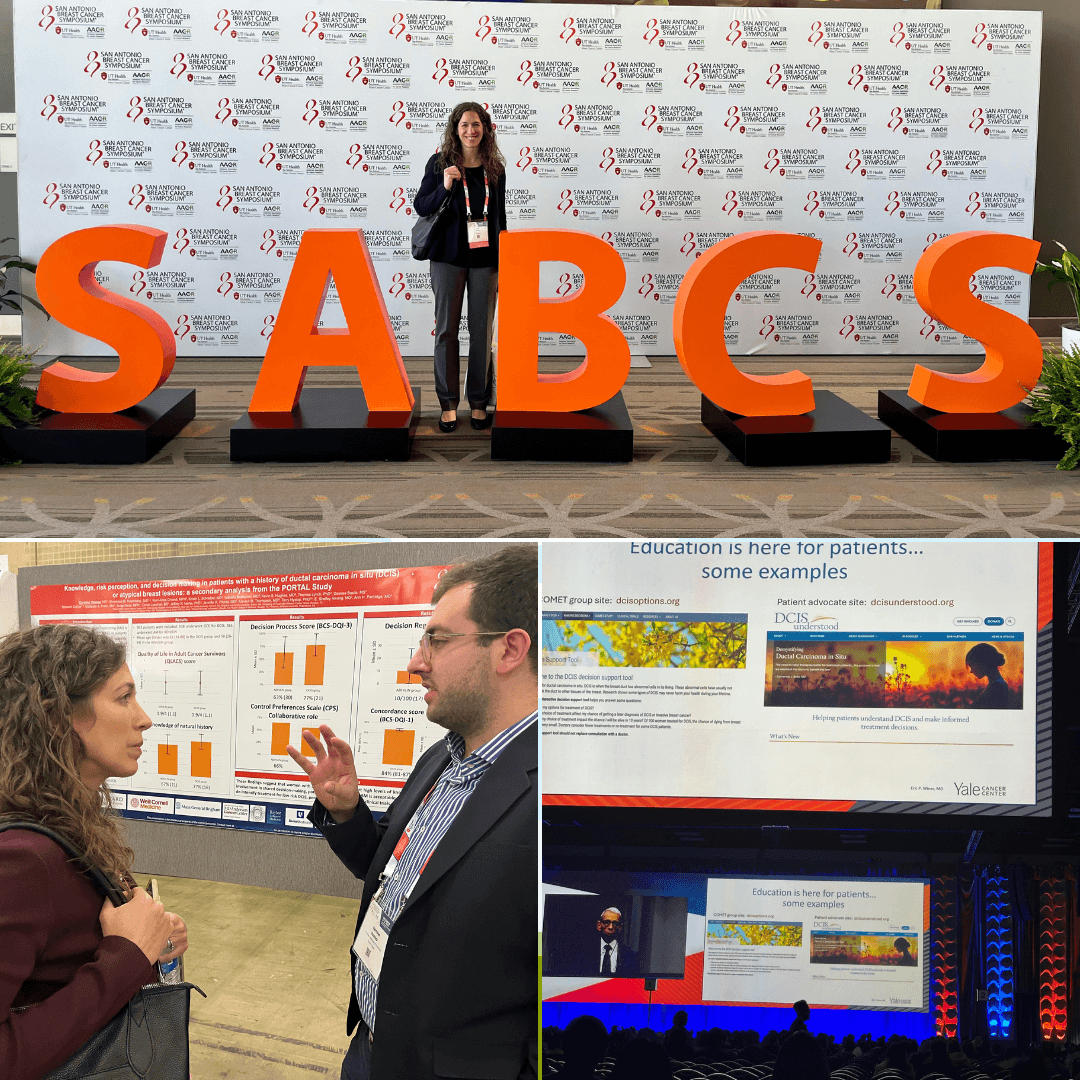
Last week, DCIS Understood had the opportunity to attend the San Antonio Breast Cancer Symposium (SABCS) — one of the world’s most important gatherings dedicated to breast cancer research and care. We returned feeling energized, inspired, and deeply grateful to be part of a global community working toward better outcomes and more thoughtful, patient-centered care.
SABCS brings together thousands of clinicians, researchers, and patient advocates from around the world. For those of us focused specifically on ductal carcinoma in situ (DCIS), it is a vital space to hear the latest research, engage in nuanced discussions, and ensure that patient perspectives remain central as the science continues to evolve.
Hearing the Latest DCIS Research
Throughout the conference, we heard cutting-edge updates on DCIS and early-stage breast cancer research — including studies focused on risk stratification, treatment de-escalation, and the ongoing effort to better understand which cases of DCIS are most likely to benefit from different treatment approaches.
While the science can be complex, the overarching theme was clear: the field continues to move toward more personalized, evidence-based care, with increasing attention to avoiding overtreatment while still ensuring excellent outcomes. These conversations are critical, particularly for DCIS patients, who often face a diagnosis that is labeled “stage 0” yet accompanied by recommendations that can feel urgent and overwhelming.
Centering the Patient Experience
One of the most meaningful aspects of SABCS was the opportunity to engage in thoughtful conversations about patient needs — not just clinical outcomes, but emotional experience, communication, and decision-making. Again and again, we were reminded that even the most promising research only fulfills its purpose when patients are able to understand it, trust it, and use it to make informed choices.
This is where DCIS Understood’s mission feels especially relevant. DCIS remains a diagnosis surrounded by confusion, conflicting messages, and wide variation in how information is presented to patients. Many people leave their initial appointments feeling frightened and unsure — not because outcomes are poor, but because explanations are often unclear.
Why Trusted, Patient-Centered Resources Matter
Events like SABCS highlight both how much progress is underway and how vital it is that patients have clear, trustworthy resources to help them make sense of that progress. Translating research into accessible, balanced information is not a luxury — it’s a necessity.
We were especially honored when Dr. Eric Winer of Yale Cancer Center highlighted DCIS Understood as a trusted resource for DCIS patients. Recognition like this reinforces our commitment to ensuring that all of our educational resources are evidence-based, transparent, and designed with empathy in mind.
The Work Still Ahead
While SABCS showcased meaningful progress, it also underscored how much work remains — particularly when it comes to DCIS-specific research and patient-centered education. Despite DCIS accounting for a significant proportion of breast cancer diagnoses, it continues to receive comparatively limited focused attention, especially in spaces where research priorities are shaped and disseminated.
Notably, DCIS Understood was the only organization at SABCS representing the voices and needs of DCIS patients. That reality was both striking and affirming. It reinforced what we hear every day from patients: that DCIS is often misunderstood, underexplained, and underrepresented — even as important research continues to emerge.
This gap is precisely why DCIS Understood exists. As the science advances, there is an urgent need for trusted, patient-facing resources that translate evolving research into clear, balanced information people can actually use. Without this bridge, progress risks remaining inaccessible to the very patients it is meant to help.
Looking Forward with Purpose
We left San Antonio encouraged by the momentum in the field — and equally motivated by the responsibility that comes with being a dedicated voice for the DCIS community. Our work moving forward will continue to focus on expanding educational resources, elevating patient perspectives, and advocating for more nuanced, evidence-based conversations around DCIS care.
We are grateful to the clinicians, researchers, and advocates who engaged with us at SABCS and shared a commitment to improving understanding of DCIS. And we remain steadfast in our mission to ensure that patients are not left behind as research evolves — but are informed, supported, and empowered every step of the way.
As always, DCIS Understood exists to provide clarity, compassion, and real choices for people navigating a DCIS diagnosis — and SABCS reinforced just how essential that work remains.
Subscribe below for the latest DCIS news and updates.