Category: Latest Research
-
July 22, 2026

How Wide Do Lumpectomy Margins Really Need to Be? A Major New Trial Weighs In
If you’ve had a lumpectomy for DCIS, you probably remember waiting on your pathology report — and hoping for the words “clear margins.” Many patients also remember the follow-up conversation: what happens if the margin, the rim of healthy tissue around the removed tissue, comes back narrower than your surgeon would like? For years, the answer has often been a second surgery. A large new analysis of a major randomized trial suggests that answer may be due for a second look.
-
July 7, 2026

Obesity and DCIS: New Research Reveals a Different Path to Invasive Breast Cancer
If you’ve been diagnosed with ductal carcinoma in situ (DCIS), you have likely encountered one of the most frustrating truths about this diagnosis: doctors still can’t say for certain whether your particular DCIS will stay put or eventually become invasive. That uncertainty drives real decisions — about surgery, radiation, hormone therapy — for the roughly 55,000 to 60,000 women diagnosed with DCIS in the U.S. each year. A new study about obesity and DCIS offers a promising piece of the puzzle.
-
June 11, 2026

“Baby TAM” After DCIS: What New Research Says About Menopausal Status and Your Risk
If you’ve been treated for ductal carcinoma in situ (DCIS) and had a conversation with your doctor about tamoxifen, you may have heard about a lower-dose option sometimes called “baby TAM.” New research presented at the American Society of Clinical Oncology (ASCO) Annual Meeting in June 2026 — and simultaneously published in the Journal of Clinical Oncology — sheds important light on how well this low-dose approach works, and why your menopausal status may matter more than previously understood.
-
May 6, 2026

Radiation or No Radiation After DCIS: New Research Offers Reassurance — and a Call for Better Conversations About Risk
If you’ve been diagnosed with ductal carcinoma in situ (DCIS), one of the biggest questions you may face is whether to have radiation after surgery. A new study published in Clinical Breast Cancer offers reassuring news: long-term quality of life and fear of recurrence may be similar whether or not radiation is part of your treatment. But nearly eight years after diagnosis, many women still overestimate their risk of recurrence — pointing to an important opportunity for clearer patient education.
-
April 15, 2026

Encouraging Update from the LORD Clinical Trial on Active Surveillance for Low-Risk DCIS
At the recent 15th European Breast Cancer Conference (EBCC15), researchers shared encouraging early findings from the LORD (LOw Risk DCIS) clinical trial , a major international study exploring whether some people diagnosed with low-risk ductal carcinoma in situ (DCIS) can safely avoid immediate surgery.
-
March 24, 2026

Navigating DCIS Outside the Traditional Path: Insights from a New Study
A newly published study in Sociology of Health & Illness explores how some women diagnosed with ductal carcinoma in situ (DCIS) are navigating their diagnosis outside the traditional treatment pathway. Rather than following standard-of-care approaches such as surgery or radiation, these women are turning to an online community to help make sense of their diagnosis, weigh treatment decisions, and find support. The study offers a window into how patients understand risk, interact with the medical system, and navigate uncertainty in the absence of clear answers.
-
March 4, 2026
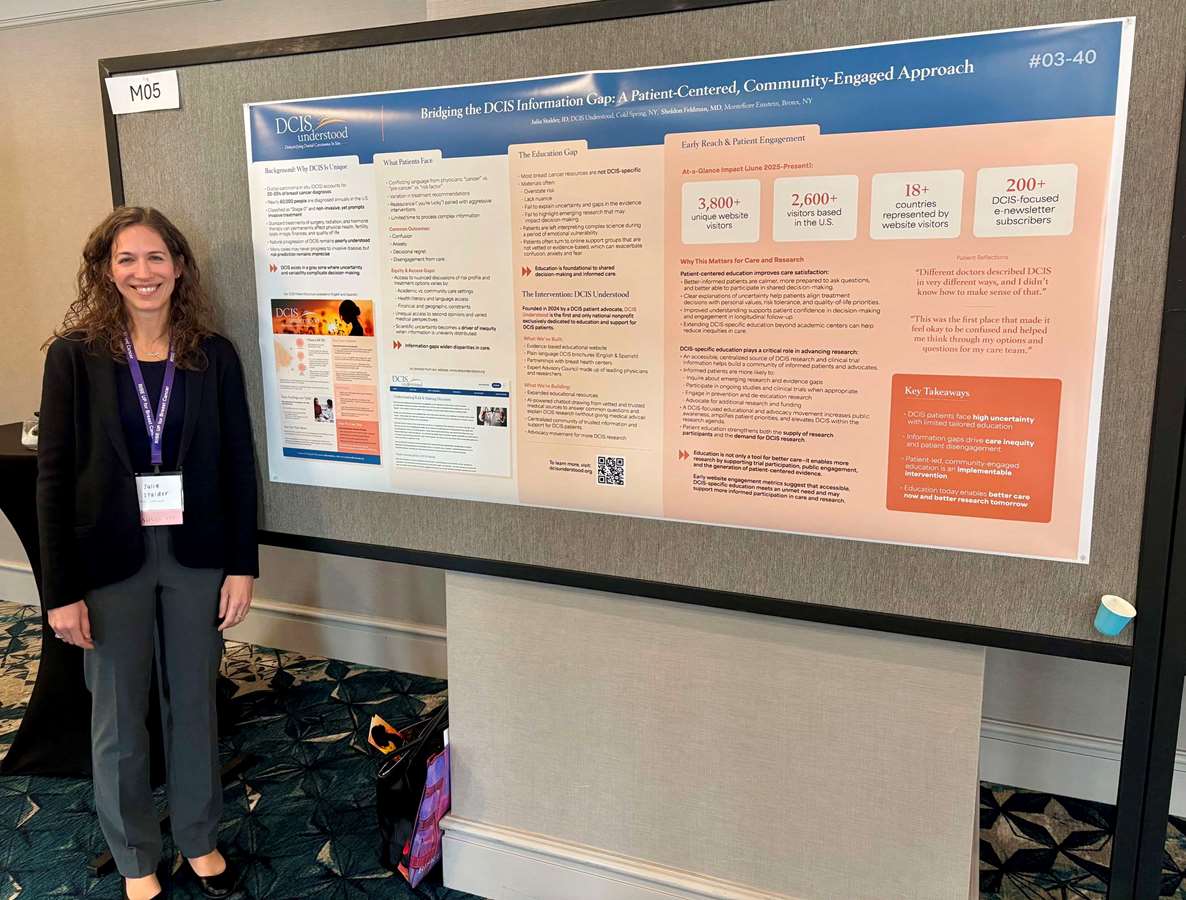
DCIS Understood at RISE UP: Prevention, Possibility, and Reimagining Breast Cancer Care
Last month, DCIS Understood had the honor of attending—and presenting at—the RISE UP (Revolutionizing Investigations to StEp Up Prevention) for Breast Cancer and Women’s Health conference hosted by UCSF. RISE UP is not a typical breast cancer conference. Its focus extends beyond treatment into prevention, early intervention, equity, innovation, and women’s health more broadly. The unifying message throughout the program was clear: we must think earlier, think differently, and think more holistically about breast cancer care. That framing could not be more relevant to DCIS.
-
February 4, 2026
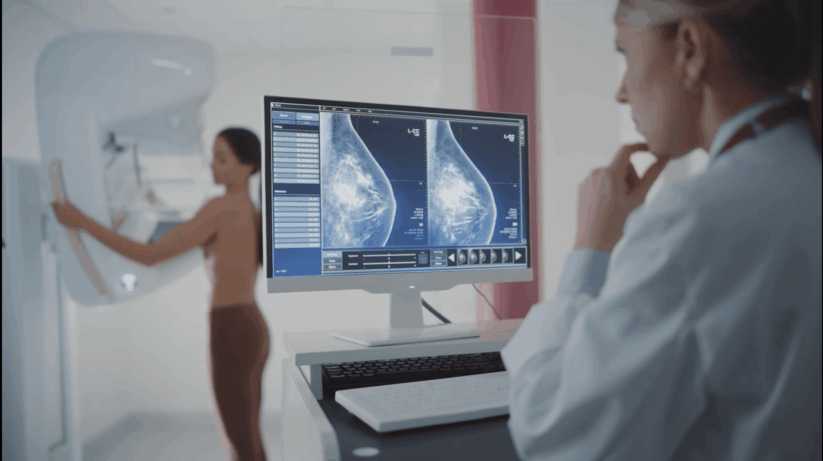
Is Tamoxifen Alone Without Surgery a Viable Strategy for Low-Risk DCIS?: Updates From the LORETTA Trial
In December 2025, results from the LORETTA trial were presented at the San Antonio Breast Cancer Symposium (SABCS), offering new insight into an important and long-standing question in DCIS care: Can some people with low-risk DCIS safely avoid surgery?
While the trial did not meet its predefined statistical threshold, the findings add meaningful evidence to the growing body of research suggesting that active surveillance may be appropriate for carefully selected patients. Importantly, the results help clarify who those patients might be.
-
January 10, 2026
New DCIS Radiation Findings Presented at SABCS: What High Risk Patients Should Know
At the San Antonio Breast Cancer Symposium (SABCS) in December, researchers presented updated results from a large international clinical trial examining radiation treatment after surgery for ductal carcinoma in situ (DCIS). The study offers important insights into how radiation can reduce the chance of DCIS returning in the same breast — particularly for people considered at higher risk of recurrence.
-
December 19, 2025
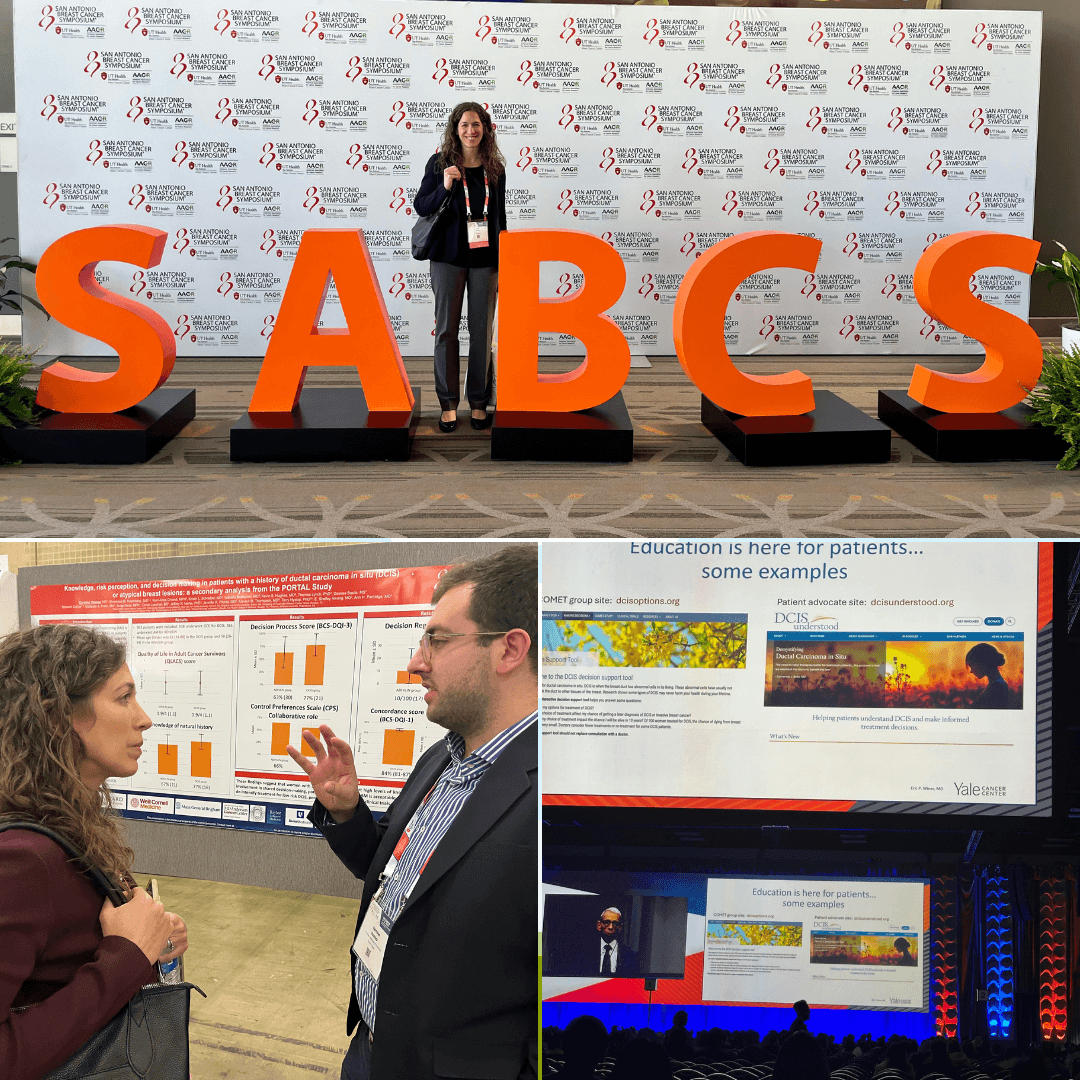
Reflections from the 2025 San Antonio Breast Cancer Symposium
Last week, DCIS Understood had the opportunity to attend the San Antonio Breast Cancer Symposium (SABCS) — one of the world’s most important gatherings dedicated to breast cancer research and care. We returned feeling energized, inspired, and deeply grateful to be part of a global community working toward better outcomes and more thoughtful, patient-centered care.
Subscribe below for the latest DCIS news and updates.