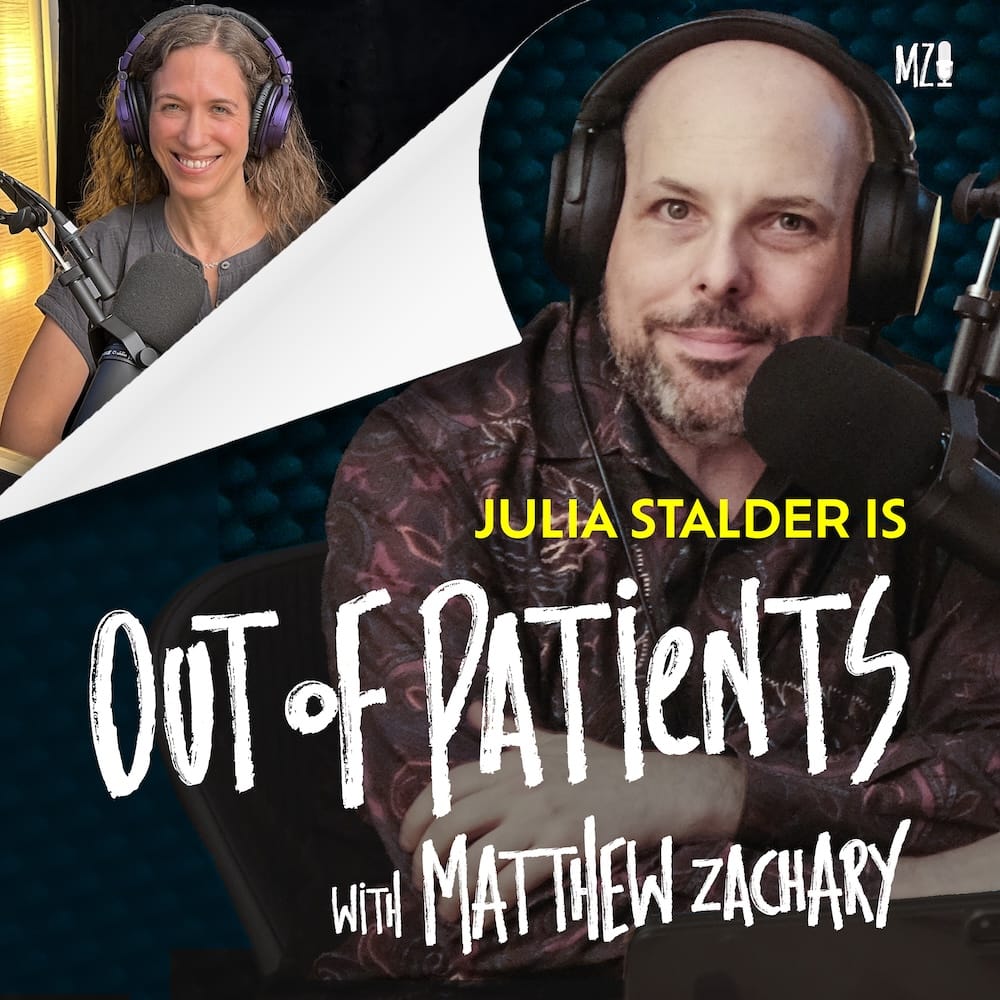
We’re excited to share a powerful new conversation on the Out of Patients with Matthew Zachary podcast, where DCIS Understood founder, Julia Stalder, discusses DCIS, active surveillance, and why the phrase “the best kind of breast cancer” can be so misleading. In the episode, titled “The Nicest Bus in Cancer,” Julia reflects on her own diagnosis and the broader challenges facing DCIS patients today.
You can listen to the full episode here:
Episode Overview
In this podcast episode, Julia — a lawyer, mediator, mom, and founder of DCIS Understood — joins host Matthew Zachary to unpack her journey with ductal carcinoma in situ (DCIS).
When Julia was told she had DCIS — the so-called “best kind of breast cancer” — she quickly realized that the reality behind that phrase was far more complicated. It’s like being told you got hit by the nicest bus: technically true, but still a life-shaking event.
What We Discuss
In this candid, thought-provoking conversation, Julia and Matthew explore:
- Why DCIS is so confusing and often fear-driven — from inconsistent explanations to a lack of clear guidance.
- The epidemic of overtreatment — and why approaches that work in other cancers (like active surveillance in prostate cancer) are still controversial in DCIS.
- The medical establishment’s discomfort with uncertainty — and how that shapes recommendations toward aggressive treatments.
- Julia’s personal choices — why she opted for active surveillance with regular imaging rather than immediate surgery, and how she navigates that path.
- Building a movement from the waiting room — candid reflections on advocacy, information gaps, and how patients are reshaping the DCIS conversation.
Why This Matters
This episode isn’t just another interview — it’s a call to rethink how DCIS is talked about and treated. For many people diagnosed with DCIS, the fear of missing out on clear guidance leads to drastic choices. Julia’s story offers a grounded, informed, and deeply human perspective that many listeners — especially those newly diagnosed — will find validating and clarifying.
From inconsistent messages from clinicians to the emotional weight of decision-making, this conversation brings to light the complexities and the human experience behind DCIS.
Listen & Engage
Tune in to the full episode to hear Julia’s story in her own words and join the broader discussion on patient-centered care and the future of DCIS treatment:
Listen on your favorite podcast platform — Apple Podcasts, Spotify, YouTube, or wherever you get podcasts.
If you find the episode meaningful, please leave a review and share it with others — especially people navigating DCIS who might be searching for clarity, community, and real patient perspectives.
Subscribe below for the latest DCIS news and updates.