
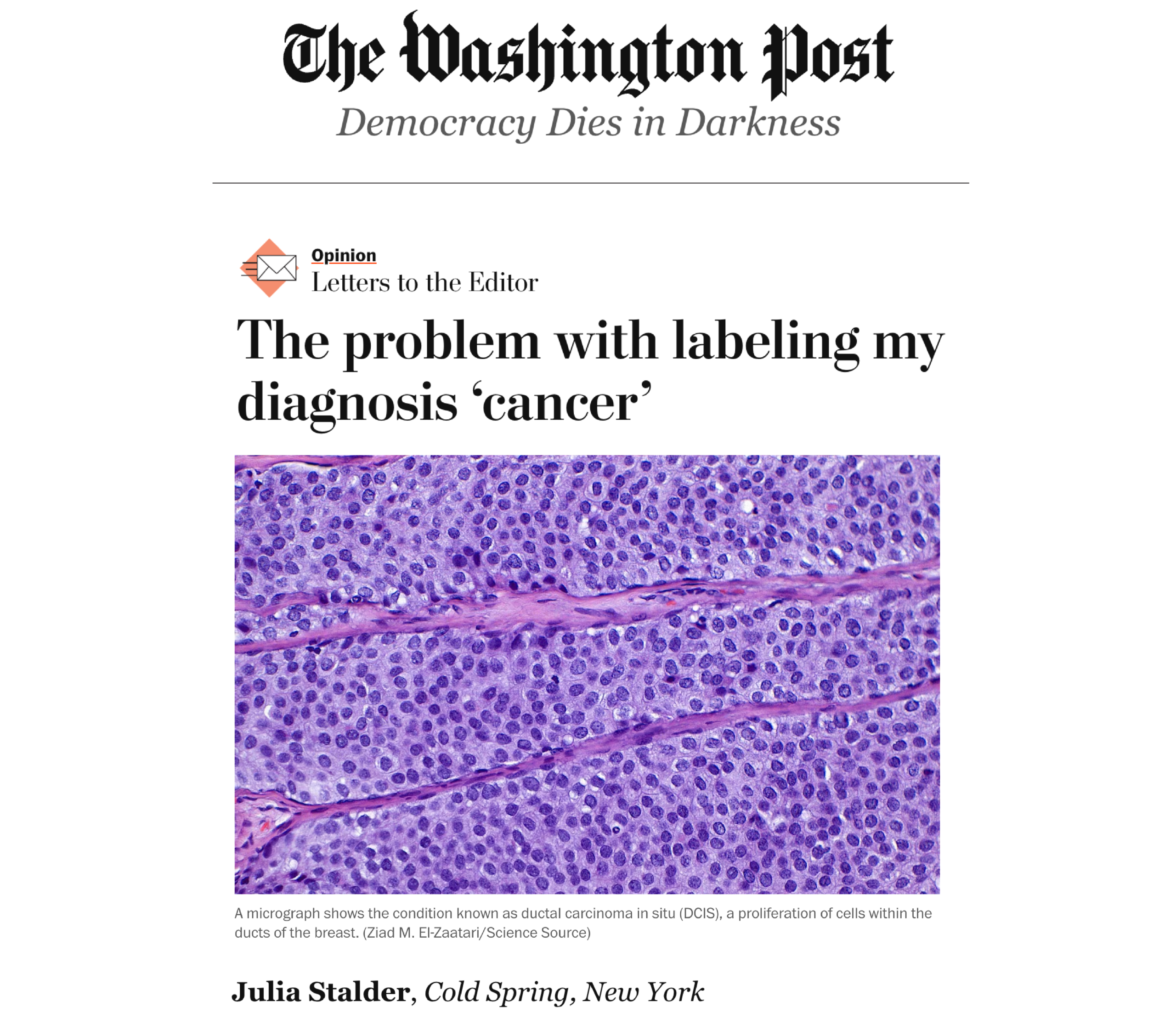
DCIS Understood in The Washington Post: Why DCIS Patients Need More Than a New Name
We’re proud to share that DCIS Understood founder Julia Stalder had a letter to the editor published in The Washington Post on October 16. The letter responds to a national conversation about ductal carcinoma in situ (DCIS) that matters to every woman facing this diagnosis.
The Conversation: Should DCIS Still Be Called “Cancer”?
On October 12, The Washington Post published a column by oncologist Dr. Mikkael A. Sekeres titled “I’m an oncologist. Here’s what to know about DCIS or Stage 0 breast cancer.” It looked at a question that doctors and researchers have debated for years: should the word “cancer” be taken out of a DCIS diagnosis?
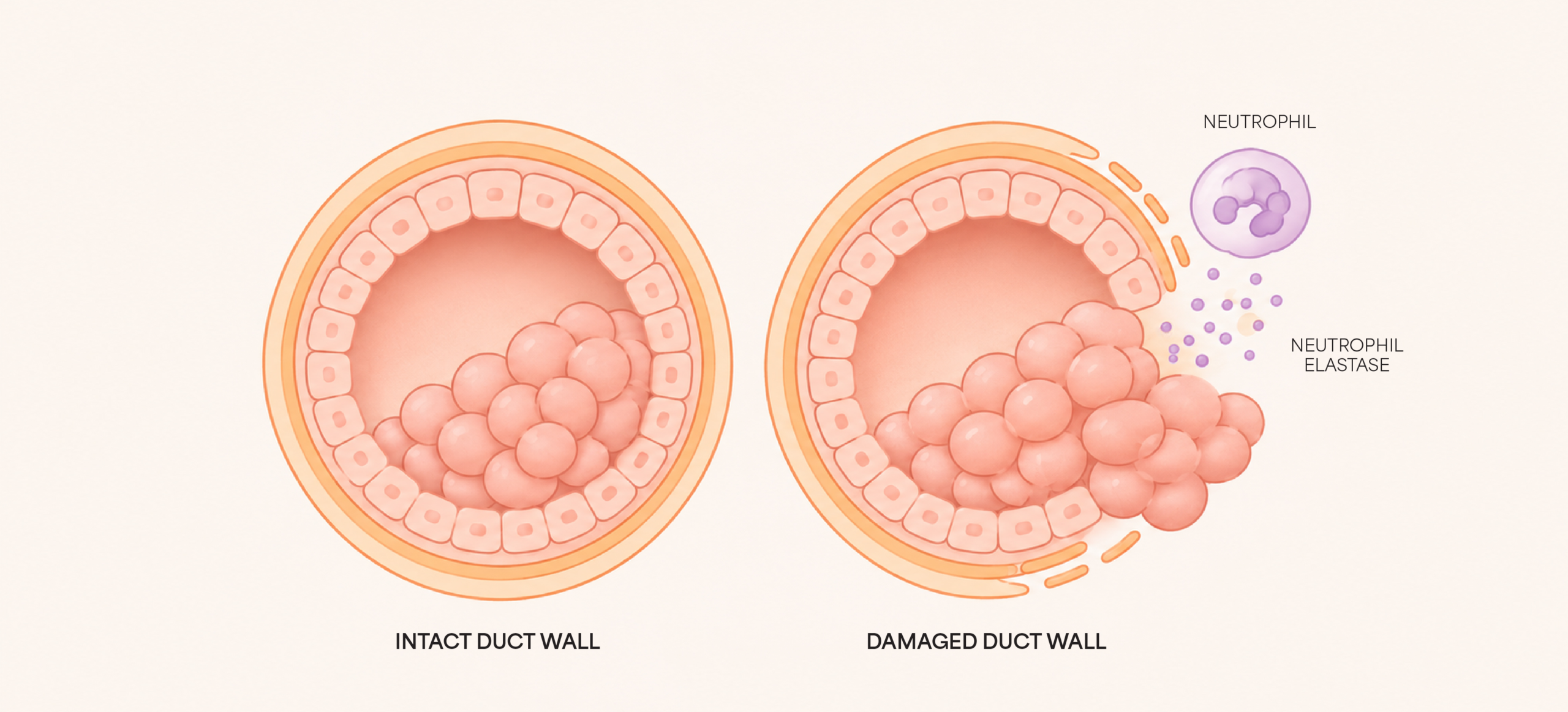
DCIS is abnormal cells that are confined to the milk ducts of the breast and haven’t spread into surrounding tissue. Many cases never become invasive. Even so, a diagnosis that includes the words “carcinoma” or “Stage 0 breast cancer” can be frightening, and that fear can push patients toward more treatment than they might choose if they fully understood their own risk.
Julia lives with DCIS herself and has been on active surveillance for more than two years. She wrote in to add a patient’s view to the discussion.
The Letter
I appreciated Mikkael A. Sekeres’s Oct. 12 online column, “I’m an oncologist. Here’s what to know about DCIS or Stage 0 breast cancer,” about whether to remove the word “cancer” from a ductal carcinoma in situ (DCIS) diagnosis. I’m a DCIS patient, and I have been living under active surveillance for more than two years. I know firsthand how powerfully the word “cancer” can shape treatment decisions.
But changing the terminology addresses only part of the problem. Fear also comes from being presented with the choices of surgery, radiation and hormone therapy for a condition that may never become invasive. Patients need clear explanations of their individual risks and alternative treatment choices that are grounded in evidence.
Active surveillance clinical trials offer reason for hope, especially the COMET trial. Its early results, published in JAMA, found that after two years of active surveillance, the rate of invasive cancer among women with low-risk DCIS was no higher than among those who received standard care, including surgery and radiation. Surveillance involved regular imaging and examinations; some participants also took hormone therapy.
Additional follow-up is still needed to establish long-term safety, and active surveillance will not be appropriate for everyone. But these findings underscore the importance of prioritizing research into less-invasive approaches and identifying who can safely benefit from them.
I am already following this path with my physician, and I want more women to have the opportunity to consider it when appropriate for their individual diagnosis. Whatever we call DCIS, women deserve the information, time and treatment choices needed to make decisions based on their actual risks, priorities and values.
— Julia Stalder, Cold Spring, New York.
The writer is the founder of the nonprofit DCIS Understood.
Read the letter on The Washington Post’s website: The problem with labeling my diagnosis ‘cancer’. (Free registration may be required for non-subscribers).
Why This Matters for DCIS Patients
The debate over a name is important, but a new label alone won’t make a DCIS diagnosis less overwhelming. What helps most is understanding:
- Your own risk. DCIS varies a lot. Features such as grade, hormone receptor status, and the size of the area involved help determine how likely it is to progress. Ask your care team how your pathology report fits into that picture.
- All of your options. Standard treatment may include surgery (lumpectomy or mastectomy), radiation, and hormone therapy. For some women with low-risk DCIS, active surveillance, meaning regular imaging and exams with or without hormone therapy, is being studied as an alternative.
- The time you have. DCIS is rarely an emergency. In most cases you have time to ask questions, get a second opinion, and make a decision that fits your values.
Our Commitment
DCIS Understood was founded to close the gap Julia describes: the space between a frightening diagnosis and a clear understanding of what it really means. We provide plain-language resources, advocate for clearer communication about DCIS, and support research aimed at better risk prediction and more personalized treatment.
Whatever we call DCIS, we believe every patient deserves accurate information, time to decide, and all evidence-based choices.
Share this article
Subscribe below for the latest DCIS news and updates
Subscribe
Subscribe below for the latest DCIS news and updates.
Connect
Latest Articles

November 12, 2026

September 14, 2026

July 30, 2026
Categories
DCIS Understood in The Washington Post: Why DCIS Patients Need More Than a New Name
We’re proud to share that DCIS Understood founder Julia Stalder had a letter to the editor published in The Washington Post on October 16. The letter responds to a national conversation about ductal carcinoma in situ (DCIS) that matters to every woman facing this diagnosis.
The Conversation: Should DCIS Still Be Called “Cancer”?
On October 12, The Washington Post published a column by oncologist Dr. Mikkael A. Sekeres titled “I’m an oncologist. Here’s what to know about DCIS or Stage 0 breast cancer.” It looked at a question that doctors and researchers have debated for years: should the word “cancer” be taken out of a DCIS diagnosis?
DCIS is abnormal cells that are confined to the milk ducts of the breast and haven’t spread into surrounding tissue. Many cases never become invasive. Even so, a diagnosis that includes the words “carcinoma” or “Stage 0 breast cancer” can be frightening, and that fear can push patients toward more treatment than they might choose if they fully understood their own risk.
Julia lives with DCIS herself and has been on active surveillance for more than two years. She wrote in to add a patient’s view to the discussion.
The Letter
I appreciated Mikkael A. Sekeres’s Oct. 12 online column, “I’m an oncologist. Here’s what to know about DCIS or Stage 0 breast cancer,” about whether to remove the word “cancer” from a ductal carcinoma in situ (DCIS) diagnosis. I’m a DCIS patient, and I have been living under active surveillance for more than two years. I know firsthand how powerfully the word “cancer” can shape treatment decisions.
But changing the terminology addresses only part of the problem. Fear also comes from being presented with the choices of surgery, radiation and hormone therapy for a condition that may never become invasive. Patients need clear explanations of their individual risks and alternative treatment choices that are grounded in evidence.
Active surveillance clinical trials offer reason for hope, especially the COMET trial. Its early results, published in JAMA, found that after two years of active surveillance, the rate of invasive cancer among women with low-risk DCIS was no higher than among those who received standard care, including surgery and radiation. Surveillance involved regular imaging and examinations; some participants also took hormone therapy.
Additional follow-up is still needed to establish long-term safety, and active surveillance will not be appropriate for everyone. But these findings underscore the importance of prioritizing research into less-invasive approaches and identifying who can safely benefit from them.
I am already following this path with my physician, and I want more women to have the opportunity to consider it when appropriate for their individual diagnosis. Whatever we call DCIS, women deserve the information, time and treatment choices needed to make decisions based on their actual risks, priorities and values.
— Julia Stalder, Cold Spring, New York.
The writer is the founder of the nonprofit DCIS Understood.
Read the letter on The Washington Post’s website: The problem with labeling my diagnosis ‘cancer’. (Free registration may be required for non-subscribers).
Why This Matters for DCIS Patients
The debate over a name is important, but a new label alone won’t make a DCIS diagnosis less overwhelming. What helps most is understanding:
- Your own risk. DCIS varies a lot. Features such as grade, hormone receptor status, and the size of the area involved help determine how likely it is to progress. Ask your care team how your pathology report fits into that picture.
- All of your options. Standard treatment may include surgery (lumpectomy or mastectomy), radiation, and hormone therapy. For some women with low-risk DCIS, active surveillance, meaning regular imaging and exams with or without hormone therapy, is being studied as an alternative.
- The time you have. DCIS is rarely an emergency. In most cases you have time to ask questions, get a second opinion, and make a decision that fits your values.
Our Commitment
DCIS Understood was founded to close the gap Julia describes: the space between a frightening diagnosis and a clear understanding of what it really means. We provide plain-language resources, advocate for clearer communication about DCIS, and support research aimed at better risk prediction and more personalized treatment.
Whatever we call DCIS, we believe every patient deserves accurate information, time to decide, and all evidence-based choices.
Share this article
Subscribe below for the latest DCIS news and updates
Connect
Latest Articles
November 12, 2026
September 14, 2026
July 30, 2026

